
How personal self-care routines can transform lives, nurture the soul, and build unbreakable family bonds, all while promoting strength and compassion. The equestrian version.
I’ve heard the comments from well-meaning friends and family. “You spend so much money on horses.” I have even picked up on the underlying sentiment: “Its a selfish expense.” I know where they’re coming from; on the surface, horses are a significant financial commitment. But what they don’t see when they look at a barn and the horses is the immeasurable return on an investment in myself, my daughter, and our shared joy and close bond. This isn't just a hobby; it’s a conscious choice to build a life of fulfillment, a choice every woman and mother deserves to make for herself.
Society places immense pressure on mothers to be selfless, to pour everything they have into their families. But what happens when our own cups are empty? We are told to invest in self-care, and for many women, that can take the form of monthly salon appointments, boutique gym memberships, therapy sessions, designer bags, or girls' weekends away. These are all valid ways to recharge, but they come with a price tag. Let's look at the numbers.
A monthly budget for common self-care practices can easily add up:
- Gym/Fitness Classes: $100 - $200
- Hair & Nails: $150 - $300
- Traditional Talk Therapy: $400 - $800
- Skincare & Cosmetic Treatments (Botox, fillers, facials): $500 - $1200+
- Social Outings & Dining: $200 - $500
A modest approach to these activities can cost well over a thousand dollars a month. My life with horses, which I manage carefully and affordably, costs less than that, even with three horses. How? By being mindful and focusing on what I truly need. It's not about rated shows, brand-new tack, or the most stylish apparel. Instead, it's about the emotional and physical fulfillment that keeps my body and mind healthy. My investment pays dividends that no spa day or shopping trip ever could. It’s an investment in character, connection, and clarity.
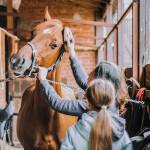
This choice is not about extravagance; it is about substance. When I'm in the barn with my daughter, I'm not escaping. I am actively mentoring her. The barn is our sanctuary; a place where life lessons are learned in the quiet rustle of hay, the measurement of feed rations, and the soft nicker of a pony that greets my three-year-old before even looking at me. My daughter learns responsibility by filling water buckets. She learns gentleness and patience while grooming, and the profound emotional intelligence required to communicate with an animal that mirrors her own energy. Can you tell me where else a three-year-old learns that?
Here, she is and will be protected from the harsh competitiveness, power imbalances, and bullying that often affect young people, especially in sports. She is building a partnership based on trust and respect, not dominance or praise. This deep connection to nature and animals fosters a unique spiritual awareness. It’s in the quiet moments watching a sunset from the saddle that she will connect with something greater than herself, building a foundation of faith that is personal and profound. How do I know, because I experienced it myself.
The physical benefits are just as tangible. Mucking stalls, carrying hay bales and water buckets, and riding build a functional, resilient strength that no elliptical machine can offer. Mentally, horses demand that you be present. You cannot be scrolling on your phone or worrying about your to-do list when you have the reins in your hands. This forced mindfulness is a balm for a busy mind, providing a clarity that I carry back into my roles as a wife and mother. I return not depleted, but refilled, and my daughter will greatly benefit from this as well.
Research has demonstrated that interaction with horses offers significant developmental benefits for young children, particularly in the realms of focus, communication, and overall neurodevelopment. According to a study published in the Journal of Physical Therapy Science, equine activities improve balance, coordination, and motor skills, as children must adjust their bodies in response to the horse's movement, enhancing brain-to-nerve system communication. Similarly, occupational therapy research highlights how caring for and riding horses develops fine motor skills and dexterity, such as when children groom, tack, or lead a horse, fostering better hand-eye coordination.
Mentally, horses act as powerful vehicles for mindfulness and mental awareness. The structured environment in the barn with horses encourages children to remain focused, as they learn to read a horse’s body language and respond appropriately. This attentiveness extends to improved communication skills; children must use both verbal and nonverbal cues effectively to guide and connect with the animal. Studies in Developmental Neurorehabilitation indicate that children with speech or social challenges benefit from bonding with a horse, which helps build confidence and encourages progress in speech and interpersonal communication.
On an emotional level, interacting with horses has been shown to enhance self-esteem and build resilience. Research from The Human-Animal Bond Research Institute (HABRI) reveals that horses’ nonjudgmental and responsive nature nurtures a child’s confidence, providing a safe environment to learn and grow. The rhythmic gait of a walking horse has even been found to mimic the natural movement patterns necessary for walking, supporting neurodevelopment in children with conditions like cerebral palsy.
Altogether, equine activities combine physical, mental, and emotional elements, making them an invaluable tool in therapeutic and developmental contexts for young children.
So when people question the expense, I wish they could see what I see. I wish they could see my daughter’s confidence grow as she masters a new skill. Her desire to take initiative and responsibility when she states "I do it!" I wish they could feel the peace that settles over me after a long ride; a peace that has been especially profound after nine years of caregiving for my critically ill parents, one of whom I recently lost. And I wish they could understand that how a woman chooses to invest in her own well-being is deeply personal and it shouldn't be judged.
This is my version of self-care. It’s therapy and a workout, a classroom and a sanctuary, all in one. It’s an investment that nurtures my soul, strengthens my body, and forges an unbreakable bond with my daughter. The return is a happy, fulfilled mother and a strong, compassionate child. And that is a priceless asset to our entire family.